Sea, Winter and Early Spring: The Thinking Behind a Course Menu
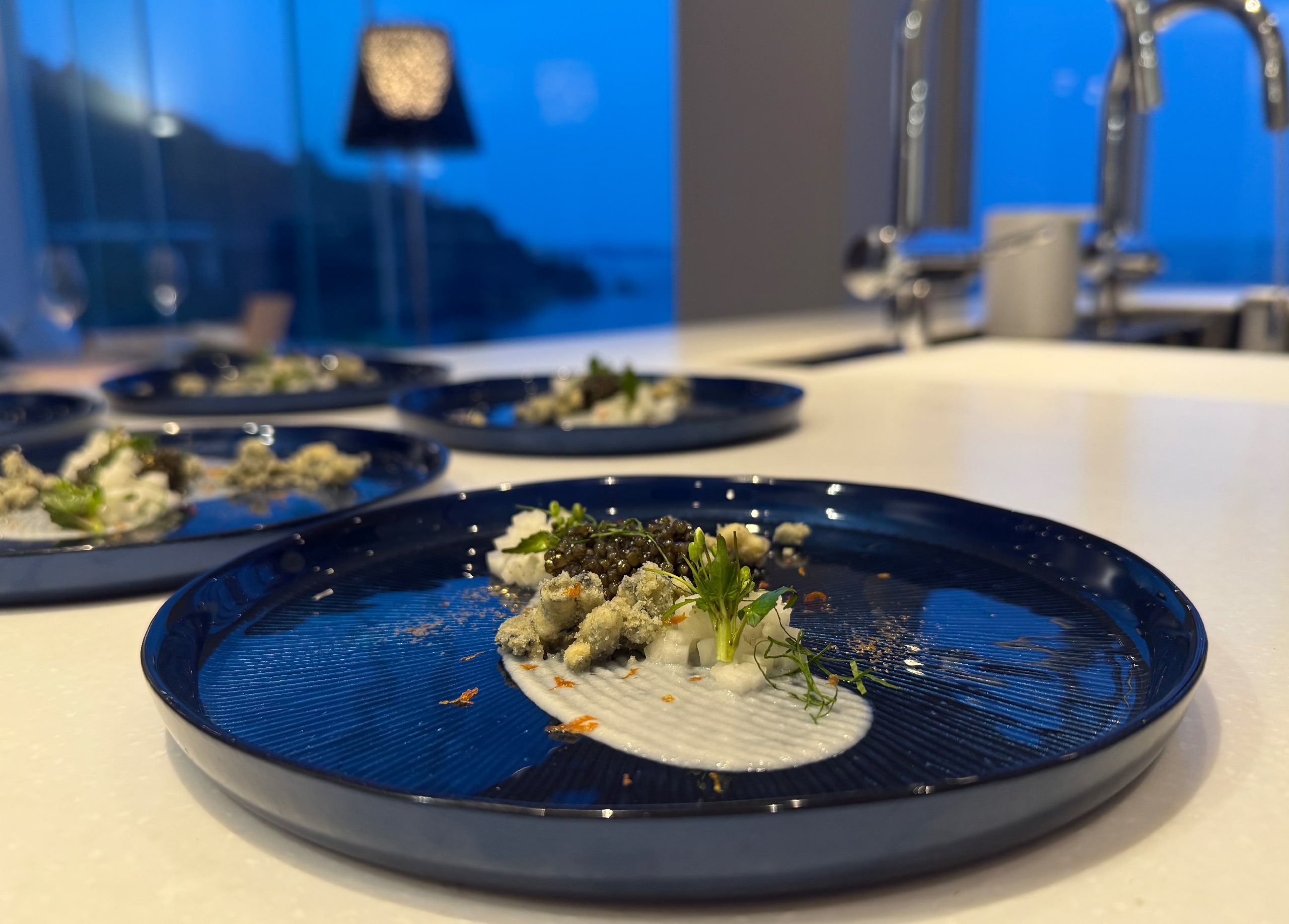
Designing a Private Dinner at a Seaside Villa
One evening, I was invited to prepare a private dinner at a client’s villa. They had welcomed me many times before. With each visit, I came to understand more about their preferred wines, favourite ingredients and even how much they liked to eat.
Beyond the glass doors, the sea filled the view. A small hill and mountains stood nearby. It was a setting that felt almost cinematic. Since the guests would dine looking out on that landscape, I thought the menu should be created specifically for that place.
It was 28 February. The temperature during the day had reached around 18°C, and there was a definite suggestion of spring, though winter had not yet left. I chose “Sea, Winter and Early Spring” as the theme of the menu.
Letting the Course Follow the Changing Season
When designing seven dishes, my first concern is how the whole course becomes one coherent story, as well as the quality of each individual plate.
For this dinner, I planned a progression from the deep sweetness and savouriness of winter towards the gentle bitterness and refreshing lightness of spring. I wanted the guests to experience the movement of the seasons through the meal.
The First Dish — Like Looking Out to Sea
I began with turnip. Its quiet winter sweetness offered an opening that related to the sea stretching out before the guests.
The first dish helps guests settle into a course. I wanted a gentle beginning rather than a forceful flavour, allowing the view outside and the first mouthful to connect naturally.
The Starter — Early Spring in Local Ingredients
For the starter, I chose ingredients with a connection to the area: kinmedai, or splendid alfonsino, sakura shrimp and citrus. The dish brought together the produce of Sagami Bay.
The richness and sweetness of the fish met the texture and aroma of the shrimp. Refreshing citrus acidity suggested the boundary between winter and spring.
I also paid close attention to its appearance. In French cuisine, I regard the way a dish looks as part of its taste. A starter is an especially good moment for visual pleasure: the instant a guest thinks, “How beautiful,” anticipation for the rest of the meal begins to grow.
The End of Winter — Fugu Shirako
Next came fugu shirako, the milt of pufferfish, an ingredient I associate with the finest part of winter.
I prepared it à la meunière with French butter and served it with beurre noisette. I also added Asakusa nori, a variety said to account for just 0.1% of the nori in circulation in Japan.
The dish brought the delicacy of Japanese ingredients together with French technique. With the wine pairing in mind, I designed it so that the toasted butter and the nori would linger on the palate.
Why I Chose French Lobster
For the fish course, I chose lobster. At a seaside villa, Japanese spiny lobster would have been an obvious possibility. But for the depth I wanted to express through French cuisine, I felt French lobster was the right choice.
I think of my cooking as a concerto, with layers of aroma and a deep, lingering finish. The complexity of lobster’s fragrance was necessary for that particular expression.
I paired it with morels, a characteristic ingredient of spring, and the first French white asparagus of the season. The result was an aromatic dish that reflected the changing season and accompanied the wine.
Chateaubriand — A Day with Black Truffle
For the main course, I chose chateaubriand, the exceptionally limited central portion of the fillet, of which less than a kilogram can be taken from one animal. I marinated it with black truffle for a full day before service.
The truffle aroma gradually entered the meat, developing a deep finish when it was cooked. I also used a generous amount of French black truffle at the end, as its season was drawing to a close.
It was a dish with the depth and strength of French cuisine, appropriate to this later stage of the course.
Keeping Hot Dishes Simple and Delicious
When planning the presentation of a whole menu, I give starters and desserts space for visual elaboration. Hot dishes are plated more simply.
The reason is practical. Spending too long on the presentation can prevent a warm dish from reaching a guest at its best temperature. I would rather guests enjoy precise cooking and a carefully made sauce while both are in their ideal condition.
By assigning different roles to different parts of the menu, I can give both appearance and flavour the attention they deserve.
Dessert — Ending with Lightness
The dessert was a light blancmange with strawberries and blood orange. After the richness of the chateaubriand, I wanted the meal to finish with freshness and ease.
For me, the ideal ending combines satisfaction with lightness.
A Menu for That Place Alone
This course was designed for that day, that place and that view. Even with the same ingredients, another setting would call for a different structure. In another season, the whole menu would change.
Knowing a client’s preferences allows me to suggest something that goes a little further. I believe this is central to private dining.
In a restaurant, guests enjoy their meal within the restaurant’s setting. In private dining, the food adapts to the client’s own space. That shift in perspective underlies the way I design a full course menu.