Taking Beef Seriously
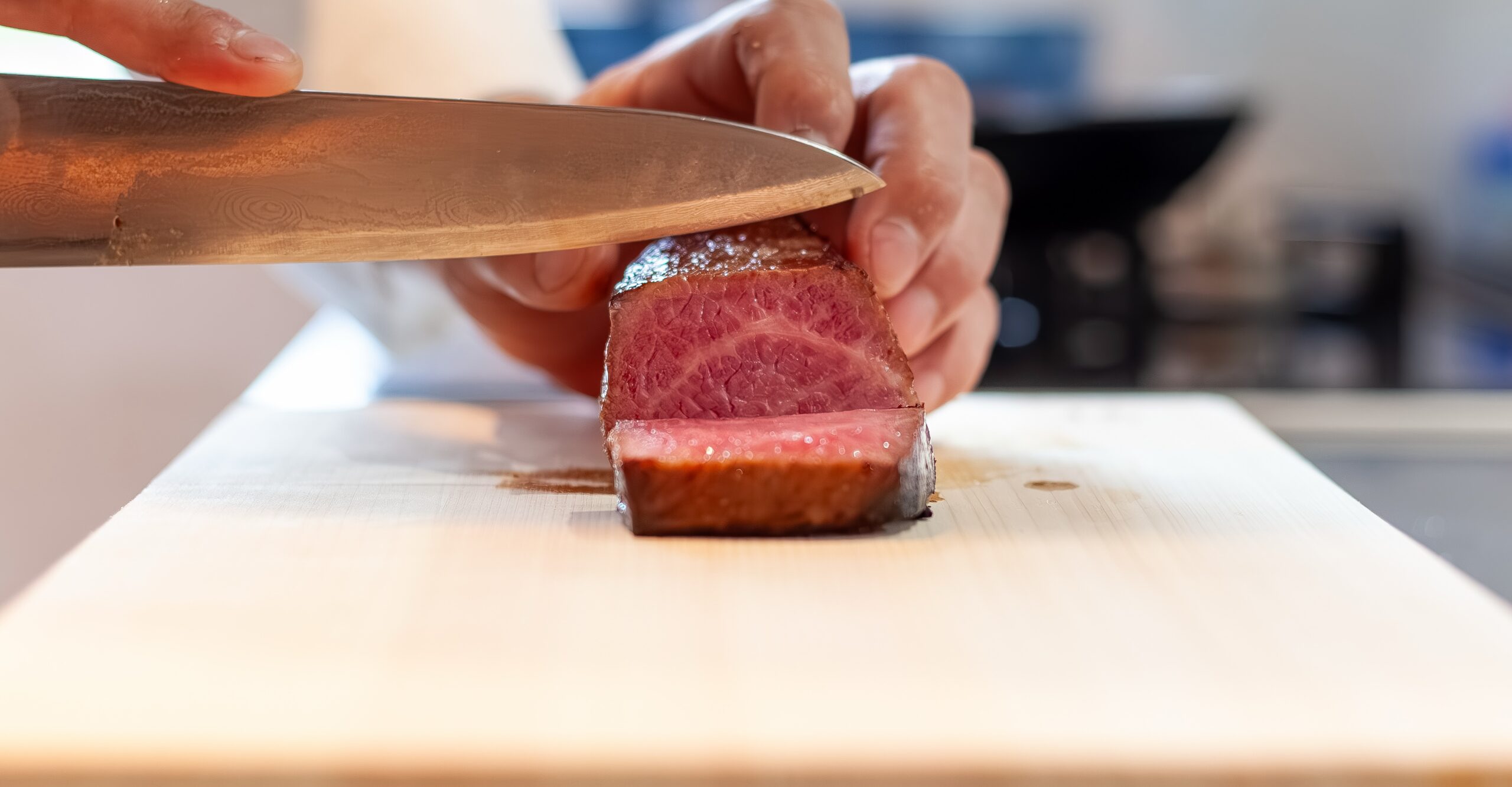
For me, “A5 grade” is not, on its own, proof of the quality of a finished dish. It is a starting point. The real questions begin there.
It is common to hear “We use A5 beef” offered as a guarantee of quality. As a chef, I see that grade as the entrance to the work, rather than its conclusion.
A Whole World Within the Round
What is broadly called the hindquarter or round contains many different cuts: rump, ichibo, shintama, inside round, outside round and shank. Even within those cuts, the character of the meat changes.
Shintama, for example, includes tomosankaku, kamenoko, shinshin and marukawa. I find tomosankaku and shinshin particularly suited to roast beef. Within each of those, I look again at how the meat will cook, the direction of its fibres and the distribution of fat, and select only the best sections.
There is a difference between using a good cut and choosing the best part within that cut. That difference becomes flavour when it reaches the table.
Only a Small Part of the Ichibo
Within the ichibo, there is a particularly tender, fine section of which only about 500 g to 1 kg can be taken. That is the portion I use when I refer to ichibo.
Even among beef of the same A5 grade, flavour varies with the animal’s sex, age, feed and environment. To find the fillet I am looking for, seeing the meat is not enough. I need to know something about the animal behind it.
Cooking Away from a Restaurant Calls for Just as Much Care
In a restaurant, cooking can be adjusted to the condition of the ingredient immediately before service. Private dining away from the restaurant requires a different approach. Yet I do not want the result to feel as though it has been cooked and left waiting.
I use low-temperature cooking together with the Vide Pro process to retain the flavours I want in the meat. The timing of that process changes the result: the day before, on the day, or immediately before departure can each produce a different depth of flavour. I therefore carry out that stage as close as possible to leaving for the client’s venue.
Delivering the Quality of Freshly Cooked Food
A restaurant has its own way of managing cooking; a private dining venue has another. Working towards the best result for the environment, even with the same ingredient, is part of being an honest cook.
My responsibility extends beyond making something delicious to delivering it to the guest in its best condition. At every venue, I work towards that result.